On The Privilege of Mercy
Power, Law, and the Moral Mask in The Merchant of Venice
“The quality of mercy is not strained; It droppeth as the gentle rain from heaven.” - Portia
I have read The Merchant of Venice to my son at least a dozen times. We read it at night, slowly, the way a serious work demands. My son lays next to me, listening carefully, interrupting only when something does not make sense.
Children do not interrupt randomly; they interrupt at points of tension. When we reached the bond, he asked the right question immediately: why would a man demand a pound of flesh? It is not a question about plot, but about cause. It assumes that behavior must be intelligible. That instinct is correct. Shylock is not irrational. He is operating within constraints, and those constraints must be understood before his actions can be judged.
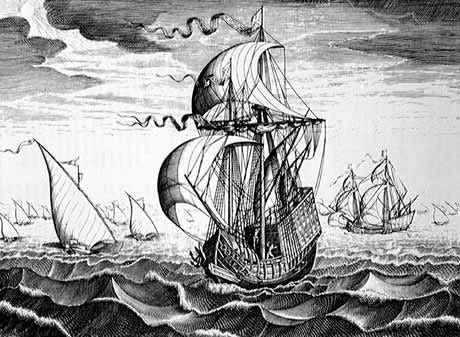
The setting that produces those constraints is Venice, not as a romantic backdrop but as a system organized around commerce. Credit, contract, and risk define relationships. Ships carry wealth across uncertain routes, and bonds distribute that uncertainty among individuals. In such a system, law is a structural necessity. Without enforceable contracts, commerce collapses. Yet law is not neutral simply because it is necessary. It is administered, interpreted, and ultimately controlled by those who belong to the system it sustains.
Shylock occupies a narrow and unstable position within this structure. He is necessary but excluded. As a Jewish moneylender, he performs a function Christian society depends on while simultaneously being condemned for performing it. This is not an accidental contradiction but a stable arrangement. He is permitted to operate because he is useful, but he is denied status because he is different. His wealth does not integrate him; it marks him. When Antonio insults him, spits on him, and actively undermines his business, he does so without consequence because the system absorbs the behavior. Antonio’s risk is reputational at most. Shylock’s is existential.
“How like a fawning publican he looks!
I hate him for he is a Christian
But more for that in low simplicity
He lends out money gratis and brings down
The rate of usance here with us in Venice.
If I can catch him once upon the hip,
I will feed fat the ancient grudge I bear him. He hates our sacred nation, and he rails,
Even there where merchants most do congregate,
On me, my bargains and my well-won thrift,
Which he calls interest. Cursed be my tribe,
If I forgive him!” - Shylock
From that asymmetry, the bond becomes intelligible. It is not merely an expression of vengeance, though vengeance is present. It is an attempt to impose symmetry where none exists socially. If Shylock cannot rely on custom, status, or goodwill, he will rely on contract. The pound of flesh is grotesque, but it is also exact. It tests whether the law will bind a Christian as tightly as it binds a Jew. The absurdity, as my son noticed, is not the demand itself but the willingness of Antonio and his circle to agree to it. Their agreement assumes something unstated but decisive: that the law will not ultimately be enforced against them in its strictest form.
This assumption reveals the deeper structure of the play. The insiders expect flexibility because the system is aligned with them. The outsider expects rigidity because it is the only protection available to him. Both expectations are rational given their positions. What appears to be a moral conflict is in fact a structural one. The language of virtue overlays a distribution of power.
“Mark you this, Bassanio,
The devil can cite Scripture for his purpose.
An evil soul producing holy witness
Is like a villain with a smiling cheek,
A goodly apple rotten at the heart:
O, what a goodly outside falsehood hath!”- Antonio
Portia’s speech on mercy is therefore best understood as a statement of ideal form rather than a description of reality. She articulates mercy as something natural, unforced, and universally elevating. It is presented as superior to justice, a divine attribute that transcends human calculation. The speech is rhetorically perfect, which is precisely why its failure matters. It is addressed to a man who has never received the kind of mercy it describes. To accept it would require him to adopt a standard that has not been applied to him. His refusal is not merely stubbornness; it is consistency.
At that point, the moral argument gives way to legal maneuver. Portia abandons persuasion and turns to interpretation. The bond is upheld in language and neutralized in practice. Shylock may take his pound of flesh, but he may not shed blood. The condition renders the contract impossible to fulfill. Law, which Shylock relied upon as an objective constraint, is revealed as contingent on interpretation. It is not the text of the law that determines the outcome, but the authority that applies it.
The reversal is immediate and decisive. Shylock moves from creditor to criminal. He is accused of threatening the life of a Venetian citizen. His property is placed at risk. His position collapses entirely. It is at this moment that mercy reenters the scene, not as a principle but as a discretionary act. Antonio intervenes to spare Shylock’s life, but the conditions attached are extensive: a significant portion of his wealth is confiscated, the remainder is controlled, and he must convert to Christianity. This outcome is framed as merciful, yet it is plainly coercive. Shylock is not restored or reconciled; he is subordinated and transformed.
When I read this conclusion aloud, my son returned to the same question: is that fair? The play does not provide a stable answer because the resolution is not designed to satisfy a neutral standard of fairness. It is designed to preserve the system. Antonio survives, the contract is neutralized, and the outsider is neutralized with it. Order is maintained. The cost is concentrated entirely on one party. The language used to describe this outcome, mercy, does not alter its structure.
“Nay, take my life and all; pardon not that:
You take my house when you do take the prop
That doth sustain my house; you take my life
When you do take the means whereby I live.” - Portia as Balthazar
This is the central tension of the play. Mercy is presented as a universal good but functions as a controlled resource. It is extended downward from those who hold power and rarely, if ever, upward. It appears after dominance has been secured, not before. It carries conditions that reinforce the hierarchy that made it necessary. In this sense, mercy is not opposed to power; it is an expression of it.
Shylock’s failure lies in his adherence to a conception of justice that ignores context. He insists on the bond without regard for circumstance, reducing justice to enforcement. The result is inhuman. The Christians’ failure lies in their use of mercy as a rhetorical ideal that masks structural advantage. They speak of generosity while controlling outcomes, offering clemency in forms that maintain their position. The result is domination presented as virtue. The play does not resolve this opposition because it is not designed to. It exposes it.
Reading the play with a child clarifies what can be obscured in solitary reading. The rhetorical surface cannot carry the argument on its own because the outcome remains visible and unfiltered. The mismatch between what is said and what is done becomes difficult to ignore. The question that remains, why one side gets to decide, leads directly to the underlying structure: control of law, control of interpretation, and control of consequence.
The forced conversion of Shylock is the final expression of that control. It resolves the conflict not by accommodating difference but by eliminating it. The outsider is not integrated as he is; he is remade according to the norms of the dominant group. That this is described as mercy underscores the instability of the term. It signals not the absence of coercion, but its justification.
“That light we see is burning in my hall.
How far that little candle throws his beams!
So shines a good deed in a naughty world.” - Portia
Portia’s speech endures because it articulates an ideal that remains compelling. The outcome endures because it contradicts that ideal in practice. The distance between the two is not a flaw to be corrected but the subject to be examined. To read The Merchant of Venice seriously is to hold that distance in view and to recognize how easily moral language can be aligned with power. Mercy, in the world of the play, is not unstrained, rather it is administered by those in power.


