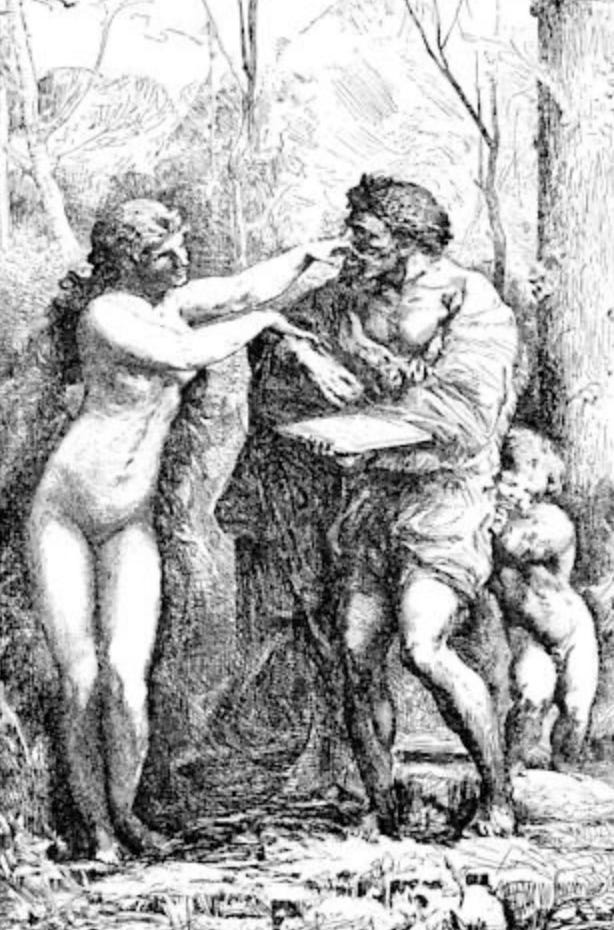
On The Cup Runneth Over
Part III of the Civilizational Drink Series - Alcohol, Sacrament, and the Metaphysics of Ecstasy
“Take, drink; this is my blood of the covenant…” - Jesus Christ, Gospel of Matthew 26:27–28
In nearly every era of civilization worth the name, alcohol played a foundational role. In short, man requires a substance for forgetting. For easing the pain of time. For fermenting memory into ritual. We misunderstand it only when we strip it of its context, when we reduce it to pharmacology, or worse, to pathology.
Alcohol, rightly understood, is not a vice to be eradicated, but a sacrament to be reckoned with. We may brew it in stainless steel vats now, but it still carries the trace of altar smoke and firelight, the glint of chalices raised in temples and taverns alike.
This is not a sentimental view. It is a Lindy view. Alcohol has outlived gods. It has outlasted empires. It is older than writing and may be what gave rise to it. The Sumerians recorded beer rations on clay tablets before they wrote poetry. Egyptian priests sanctified wine long before Pharaoh spoke law. From the Rigveda to the Psalms to the Odyssey, alcohol flows as myth, as offering, as medium between worlds.
That is the point: it mediates. It doesn’t belong to the body alone, nor the mind, nor the soul, but to their interweaving. Alcohol is not a drug; it is a bridge. In antiquity, this was called wine. In modernity, it is called medication. A shift has occurred , subtle at first, now seismic, from the communal drink to the individualized pill. From Dionysus to Pfizer. From revelry to regulation. And with this shift comes a loss more profound than the proponents of “wellness” or “sobriety culture” will admit: the abandonment of an ancient sacrament, a societal solvent, and a humanizing medium that shaped everything from Homeric verse to the birth of nations.
This third installment in the Civilizational Drink series concerns itself with a simple question: If alcohol is one of the few technologies that has endured from Mesopotamia to Milwaukie, what does it mean to live in a society that is systematically replacing it?
Alcohol has endured because it sits at the golden mean between indulgence and asceticism. Aristotle’s great ethical insight, that virtue is the midpoint between excess and deficiency, finds its lived analogy in drink. The drunkard is a fool, the teetotaler a coward. But the moderate drinker, the one who knows when to toast and when to abstain, partakes in a deeply human act: controlled release. The sort of exhale that keeps men from snapping. A temperance not of exclusion, but of calibration.
It is not coincidence that most great civilizations kept alcohol close at hand. Beer was safer to drink than water in medieval Europe. Wine was the centerpiece of Greek symposia and Christian sacraments alike. The Sumerians had a goddess of beer, Ninkasi, whose hymns are among the oldest surviving human texts. Monks refined brewing to an art. Taverns gave birth to revolutions. Jefferson stocked his cellar with over 20,000 bottles of European wine. Churchill consumed Pol Roger champagne daily during the Battle of Britain. Washington lost his first political race in part because he didn’t provide enough rum to voters. In short, the rise of the West flowed through barrels and bottles.
And yet here we are, in the most pharmaceutically medicated society in human history, declaring alcohol a public enemy. To drink, we’re told, is to court cancer, to poison oneself, to regress. All true, in the way that saying “eating meat causes cholesterol” is true. Technically, scientifically, lifelessly true. But truth without context is the beginning of propaganda. And the context is this: we have exchanged one psychoactive agent for another, not eliminated the desire for altered consciousness. We have not become sober. We have simply become medicalized.
Modern pharmaceutical regimes mimic the logic of religious asceticism but without the soul. You feel depressed? Take a daily pill. Anxious? Another pill. Trouble sleeping? Pill. Difficulty focusing? Pill. Libido too low? Pill. Too high? Another pill. We are treating life itself, its moods, its chaos, its grief, as pathology.
We want clean lines, linear progress, sterile minds. But man is not linear. He is wild. And alcohol, when properly understood, is one of the last remaining symbols of that wildness that is still allowed.
Nietzsche understood this. His Dionysian man drinks not to forget, but to remember the sacred ecstasy of existence. “In wine,” he writes, “there is truth.” Not rationalist truth, but poetic truth, the truth of tragedy, of death and rebirth, of pain endured and transformed. Alcohol is not a means of sedation in this light. It is a mode of remembering. It lubricates memory, it burns away inhibition, and it calls forth the gods we’ve forgotten.
What society builds in its drinking culture often reveals more than its constitutions. Rome had its bacchanals. The British Navy gave daily rum rations until 1970. The American frontier ran on whiskey. Paris ran on absinthe. The Harlem Renaissance ran on gin. Hemingway said he wrote one place and edited in another, the first had rum.
Faulkner drank bourbon at his typewriter. Kerouac and Ginsberg passed bottles like communion. And yet, the destructive edge of alcohol never eclipsed its generative function. The point was not whether a man drank, but what he built in spite of it or because of it. Contrast this to the pharmaceutical drinker: the man who wakes to Adderall, coasts through SSRIs, and ends with Ambien. There is no poetry in his SEDATION. No conviviality in his calibration. He is managed. And management is not the same as living.
The failure of Prohibition should have taught us this. That noble experiment, which banned alcohol from 1920 to 1933, didn’t kill the thirst. It simply moved it underground, into speakeasies and mob-led bootlegging. The murder rate soared. Cartels grew. Respect for the law crumbled. And worst of all, the moralists didn’t even achieve their goal. Americans still drank. Just more dangerously.
What’s striking is how similar today’s anti-alcohol crusade is in tone. This time, it’s cloaked not in morality but in “public health.” We are not shamed, but warned. And yet the effect is the same: a creeping cultural sterilization, a turning away from embodied pleasure, a suspicion of anything that cannot be dosed and tracked. Even red wine, once hailed for its antioxidants, is now cast as a carcinogen. Beer is poison. Whiskey is slow suicide. Meanwhile, Ozempic and Lexapro are prescribed like multivitamins. But what if alcohol, used rightly, is medicine?
Not in the reductive chemical sense. But in the ancient, ritual sense. A medicine of the soul. A social sacrament. A rite of passage. What if the very things we are told to fear the loss of control, the loosening of the tongue, the occasional foolishness, are precisely what makes us human? What if the alternative, the numbing of all volatility, the flatlining of the spirit is a greater danger? Some times it is best to drink, have conversations, sing, dance and have sex, not worry about the ice caps and the endangered quail.
The rise of mass violence in the United States is often discussed as a mystery. What changed? Why are young men snapping? But the answer, however impolite, is staring us in the face. A society that medicalizes every feeling is one in which men can no longer metabolize pain. They become time bombs. The bar fights of the past have been replaced by mass shootings. The idiot who once got drunk and punched a wall now becomes the monster who never feels at all, until he explodes.
There is no cultural ceremony around pills. No toasts. No songs. No table of elders to teach you how to dose. There is no transition into adulthood. Just a quiet pharmacy slip and a warning about grapefruit juice. This is not medicine. This is amnesia.
Alcohol, by contrast, is Lindy. It has stood the test of time. Thousands of years of trial and error. Societies that drank lasted. It doesn’t mean alcohol is benign. It means we have evolved alongside it. We know what it does, how it works, what it costs. We have myths and rituals. We have archetypes: the wise drinker, the drunk fool, the tavern keeper, the wine god. We have categories for its abuse, yes but we also have language for its use. A drink in celebration. A drink in mourning. A drink in remembrance. A drink in love. No such language exists for the man who goes numb.
And so the question becomes: what kind of society do we wish to build? One that flattens every edge, fears every indulgence, regulates every mood? Or one that teaches temperance through initiation, culture, tradition?
Temperance, as Aristotle insisted, is not abstinence. It is self-governance. It is knowing when enough is enough, and when it is not. It is the learned habit of harmony. And alcohol, more than any modern substance, forces this confrontation. It asks of the man: Can you hold your pleasure? Can you bear your spirit’s expansion without drowning in it? Can you laugh, loosen, stagger a little and still return to yourself? These are moral questions, not chemical ones.
There is a reason Christ’s first miracle is the turning of water into wine. Not as a trick. But as a sign. Joy matters, NAY it is essential to a life well LIVED. Celebration is sacred. Community begins at the table. A cup shared. A story told. A night remembered or not remembered, and that too is part of the mystery.
The new puritans do not understand this. They see alcohol as archaic, dangerous, regressive. They dream of a future without hangovers, without slurred speech, without loss of control. But this future is not utopia. It is anesthesia. And no great work has ever been made under anesthesia.
The proper response to alcohol’s risks is not eradication. It is re-ritualization. Teach the young to drink like Romans, not like frat boys. Rebuild the tavern, the inn, the long communal table. Recover the wisdom of old drunks. Don’t deny the danger honor it.
That’s what makes the drink worth respecting. Civilization did not rise despite alcohol. It rose because of it. To kill alcohol is to kill memory. To sterilize culture. To fear ourselves. It is to retreat from the dance, the clink of the glass, the Dionysian wildness that reminds us we are more than just carbon and neurons. A civilization without alcohol is a civilization in retreat. Not from poison, but from risk, from myth, from joy and from POWER.


